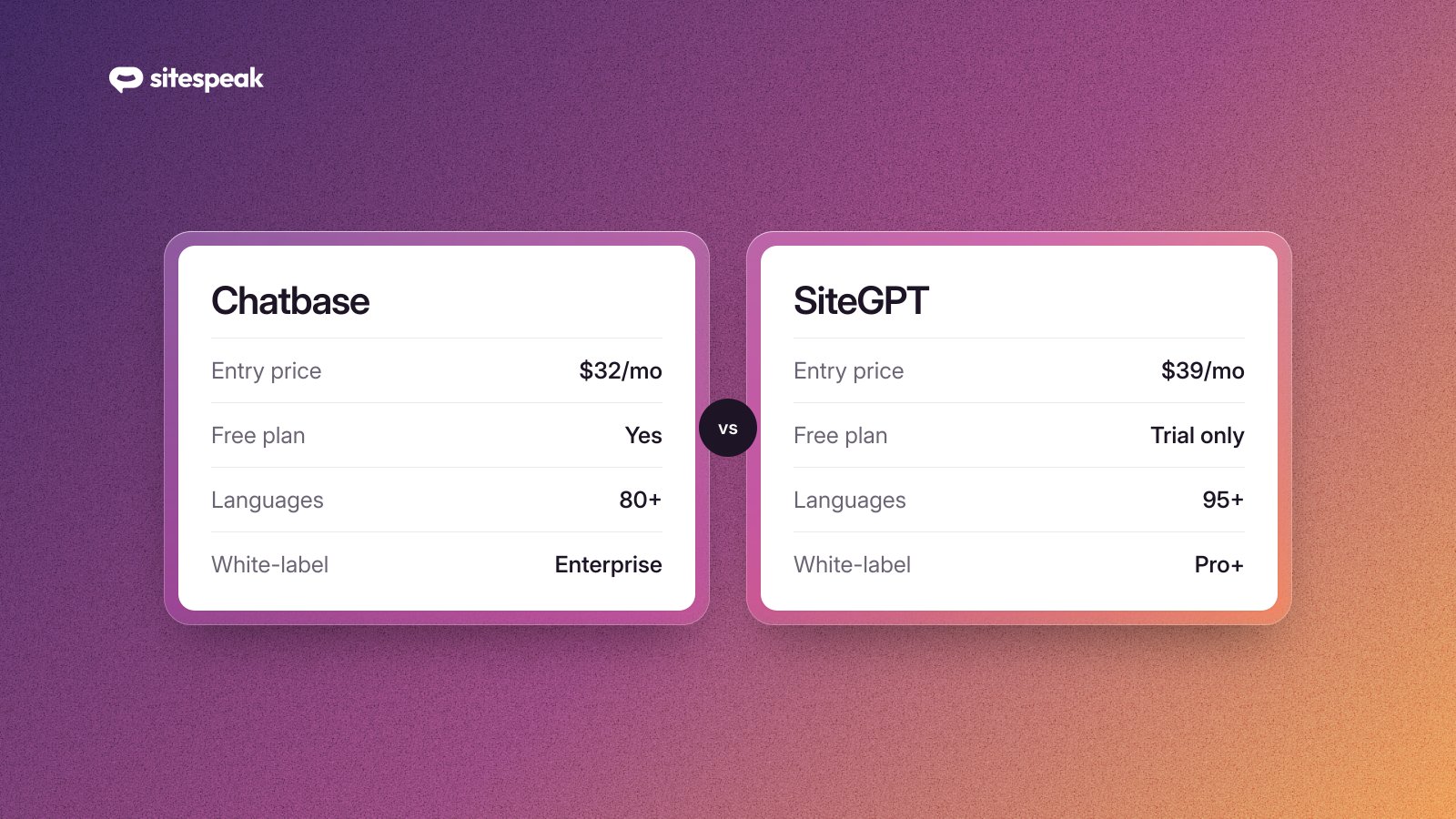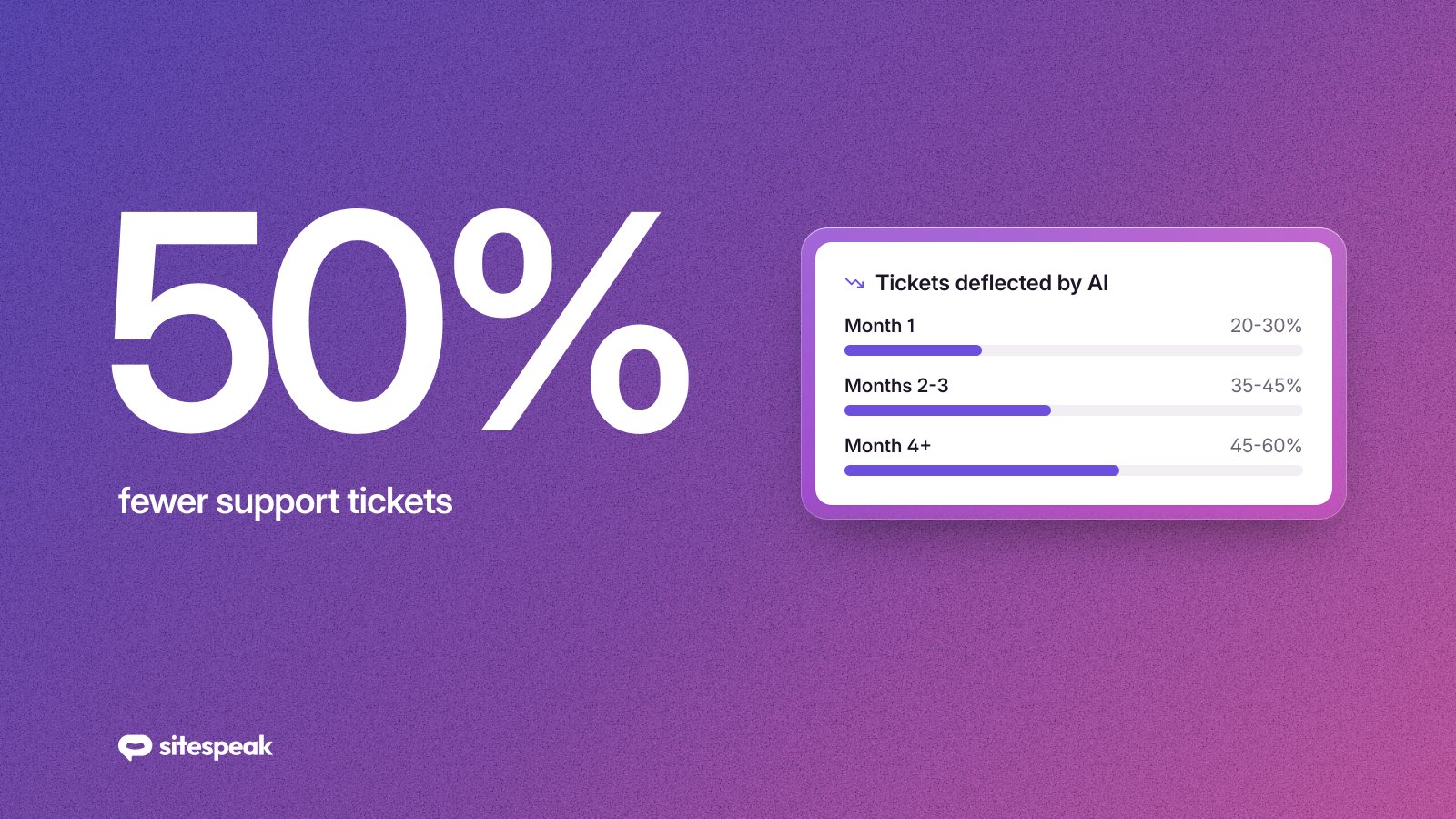
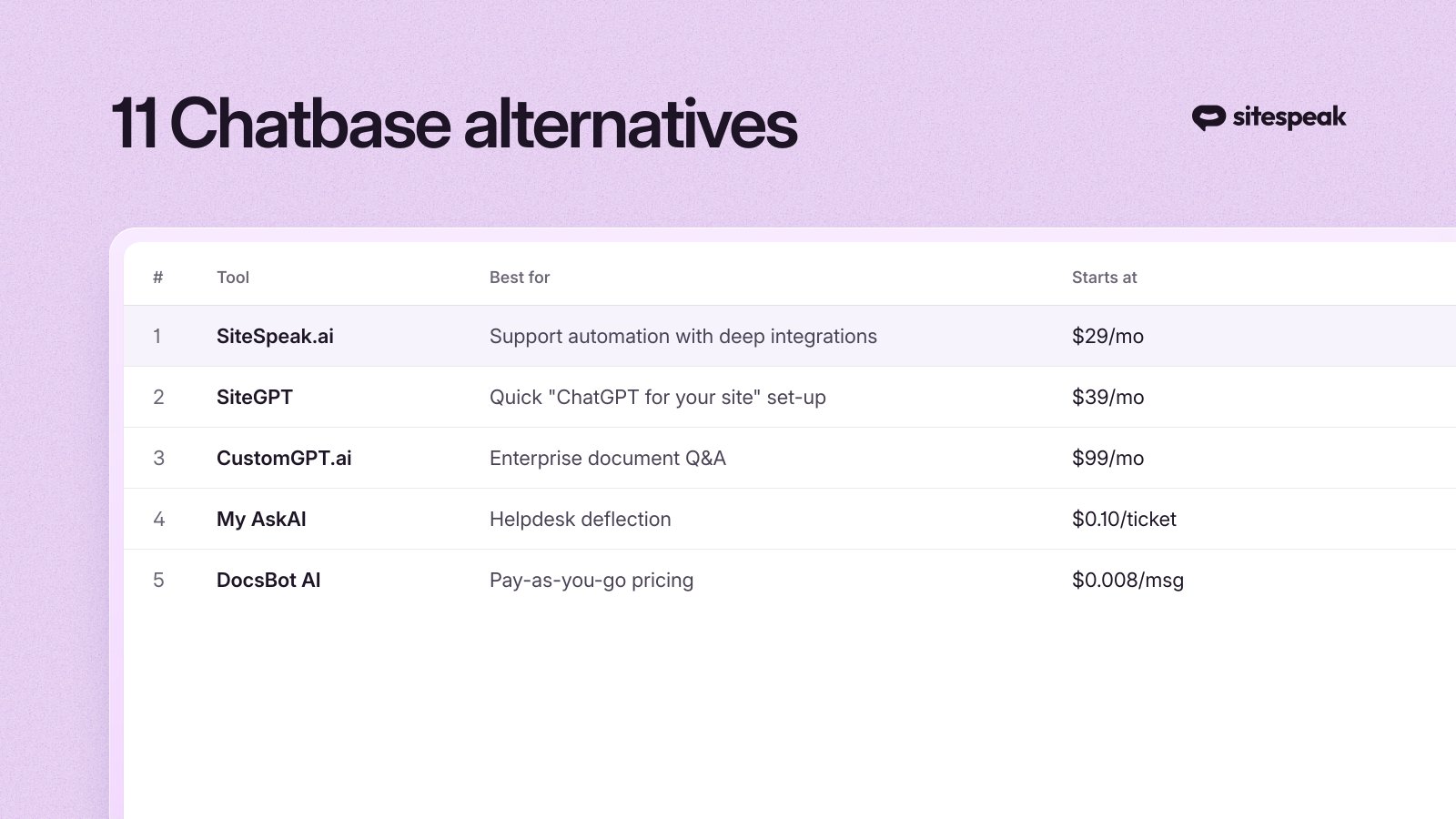
Chatbase put the "train an AI on your website" idea on the map, and it's still a solid product. But it isn't right for everyone. Some teams want better integrations, lower costs at scale, a self-hosted option, white-label, more advanced agent flows, or just a vendor that picks up the phone when something breaks.
We tested every Chatbase alternative below in April 2026. Pricing, free plans, and integrations are accurate as of publish date, but vendors change tiers often, so always click through to verify before you commit.
If you only want our shortlist, the comparison table is right below. If you want the full breakdown of each tool, keep scrolling.
TL;DR: Best Chatbase Alternatives in 2026
| # | Tool | Best for | Free plan | Starts at |
|---|---|---|---|---|
| 1 | SiteSpeak.ai | Customer support automation with deep integrations | 7-day trial | $29/mo |
| 2 | SiteGPT | Quick "ChatGPT for your site" deployments | 7-day trial | $39/mo |
| 3 | CustomGPT.ai | Enterprise document Q&A | No | $99/mo |
| 4 | My AskAI | Helpdesk deflection (Zendesk, Intercom, Freshdesk) | Free trial | $0.10/ticket |
| 5 | DocsBot AI | Pay-as-you-go message-based pricing | Free plan | $0.008/msg |
| 6 | Botpress | Developers and complex agent workflows | Free Sandbox | $89/mo |
| 7 | Voiceflow | Designer-led agent and voice workflows | Free trial | Contact sales |
| 8 | Tidio | Live chat plus AI on a single budget | Free plan | $29/mo |
| 9 | Intercom (Fin) | Mid-market and enterprise support teams | 14-day trial | $0.99/resolution |
| 10 | Crisp | Multi-channel inbox with an AI add-on | Free plan | $45/mo |
| 11 | Tiledesk | Open source self-hosting | Free (self-hosted) | €124/mo (cloud) |
What to look for in a Chatbase alternative
Before picking one, decide which of these matters most to your team:
- Data sources. Can the tool ingest websites, sitemaps, PDFs, Notion, Confluence, Google Drive, your helpdesk, your product database? Chatbase is strong here. The cheaper alternatives often aren't.
- Action layer, not just answers. Modern AI chatbots don't just respond, they act. Booking a meeting, creating a Zendesk ticket, looking up an order, capturing a lead. If your chatbot can't do this, it's a glorified FAQ.
- Integrations into your stack. Slack, Zapier, Shopify, WordPress, Webflow, HubSpot. The fewer integrations, the more glue code you'll write.
- Live chat handoff. When the AI is unsure, what happens? Email handoff is fine for low volume, but mid-market teams need real human handoff.
- Pricing model. Per-message, per-resolution, per-seat, or flat. Each one breaks at a different scale, and it pays to model your real volume before signing.
- Self-hosting and data control. If your data can't leave your infrastructure, that rules out most SaaS chatbot tools immediately.
Now, the alternatives.
1. SiteSpeak.ai
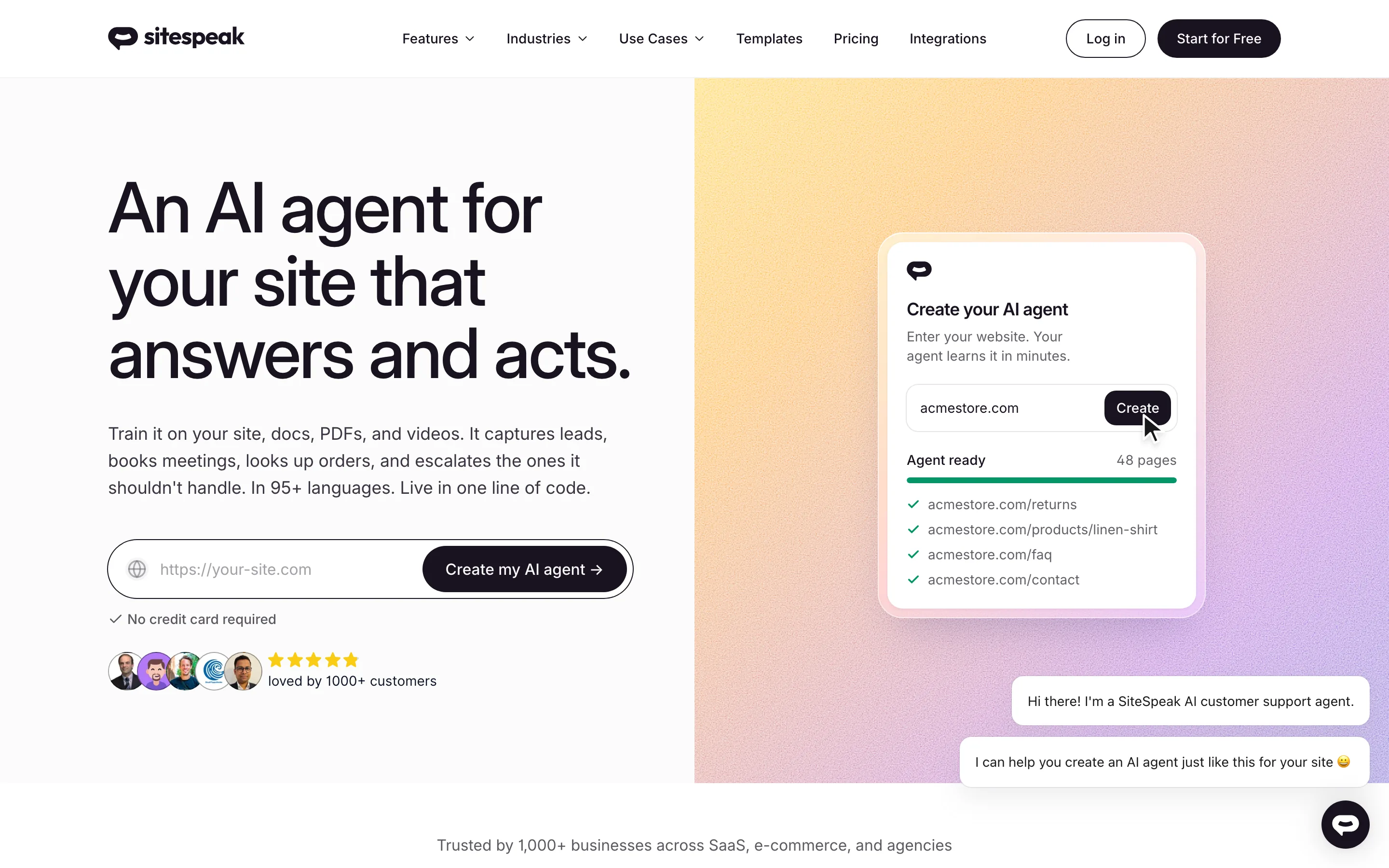
SiteSpeak.ai is our take on what an AI chatbot for your website should actually do in 2026. We built it for service businesses, SaaS teams, and ecommerce stores that want their chatbot to deflect support tickets, capture qualified leads, and book appointments without paying enterprise pricing or stitching together five tools.
It crawls your website, indexes your knowledge base, and then answers questions using your content with sources cited inline. The agent layer (we call it OpenClaw) lets the chatbot take actions: create tickets, book meetings, transfer to a human agent, write to your CRM, or call any tool over MCP.
Standout features
- Crawls websites, sitemaps, PDFs, helpcenter URLs, plus direct integrations with BookStack, Notion, Slack, Zapier, Shopify, WordPress, Webflow, and Wix.
- OpenClaw agent layer for taking actions, not just answering.
- Voice mode with multilingual STT (Azure Cognitive Services) and natural responses.
- White-label option for agencies reselling the platform.
- Built-in lead capture, appointment booking, and ticket escalation.
- MCP server support for connecting external tools and data sources.
Pros
- Deep integration set out of the box. Less custom code than Chatbase.
- Lower cost at scale than per-resolution platforms once you cross a few thousand conversations a month.
- Active product team that ships weekly. Real human support, not just docs.
Cons
- Smaller brand than Chatbase. If your stakeholders only buy from category leaders, that's a hurdle.
- White-label requires the agency tier, not the entry plan.
- Voice mode is still new and best on mid-to-long messages. Try it before you commit.
Pricing. Hobby starts at $29/mo, Standard $79/mo, Premium $249/mo. Annual billing knocks ~30% off. 7-day free trial, no credit card.
Ideal for. Founders and growth teams who want a chatbot that does more than answer questions, without paying Intercom prices. Read why teams pick us over Chatbase.
2. SiteGPT
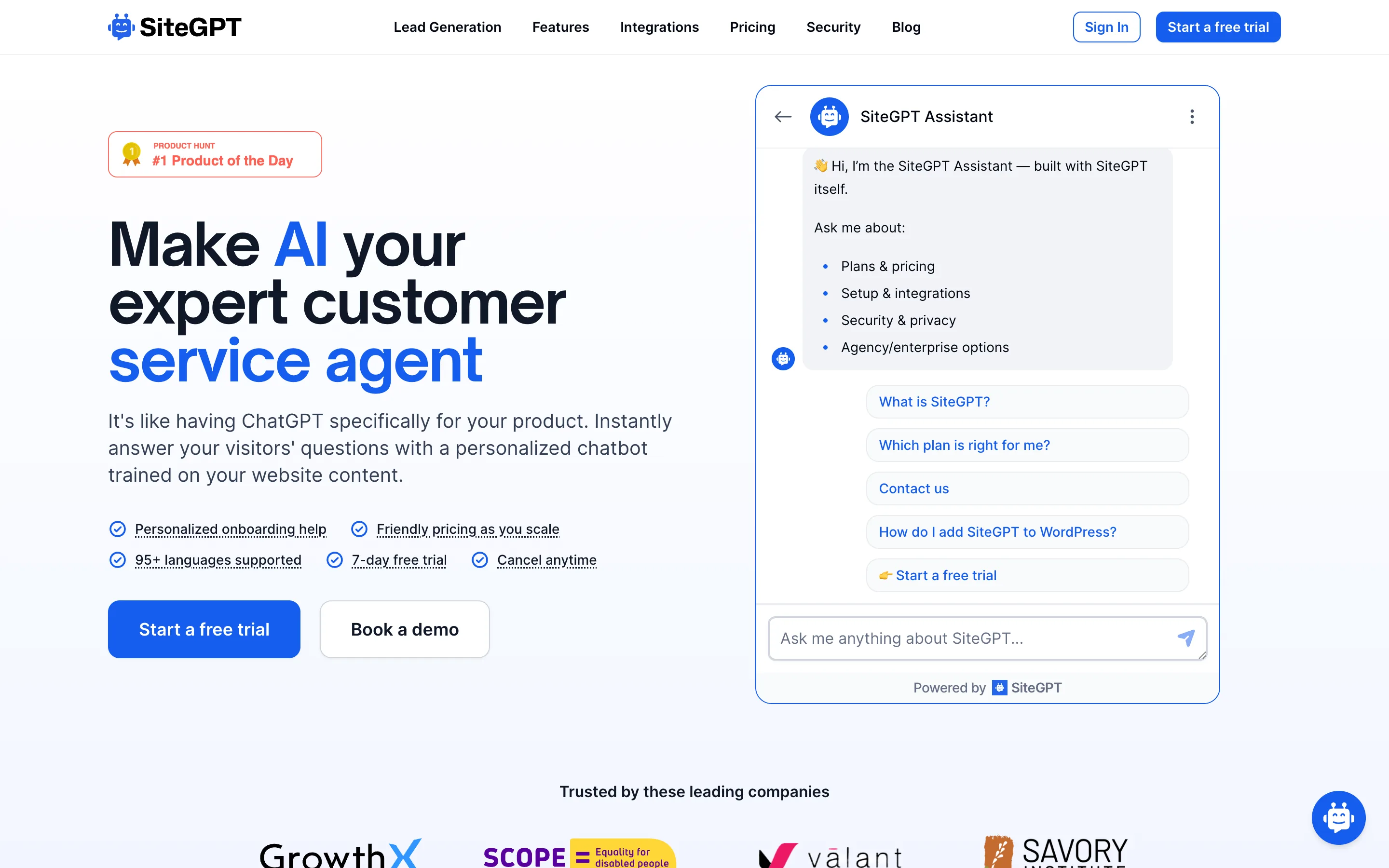
SiteGPT is the closest direct equivalent to Chatbase: paste a URL, get a chatbot trained on it. Strong onboarding, simple UI, and fast time-to-first-bot. They've added integrations with Slack, Zapier, Webflow, and Shopify in the last year.
Pros
- Clean, fast onboarding. You'll have a working bot in under 10 minutes.
- Decent integration coverage for an entry-level tool.
- Lead capture is wired in by default.
Cons
- Limited agent/action layer compared to SiteSpeak.ai or Botpress. It still leans "answer the question" not "do the thing."
- Pricing escalates fast. The Pro tier is $259/mo, which puts it close to the mid-market category.
- Customisation of the widget is more constrained than competitors.
Pricing. Starter $39/mo, Growth $79/mo, Pro $259/mo. 7-day free trial.
Ideal for. Small businesses and marketers who want "Chatbase but cheaper" with slightly more polish. See our SiteGPT alternative comparison for a head-to-head.
3. CustomGPT.ai
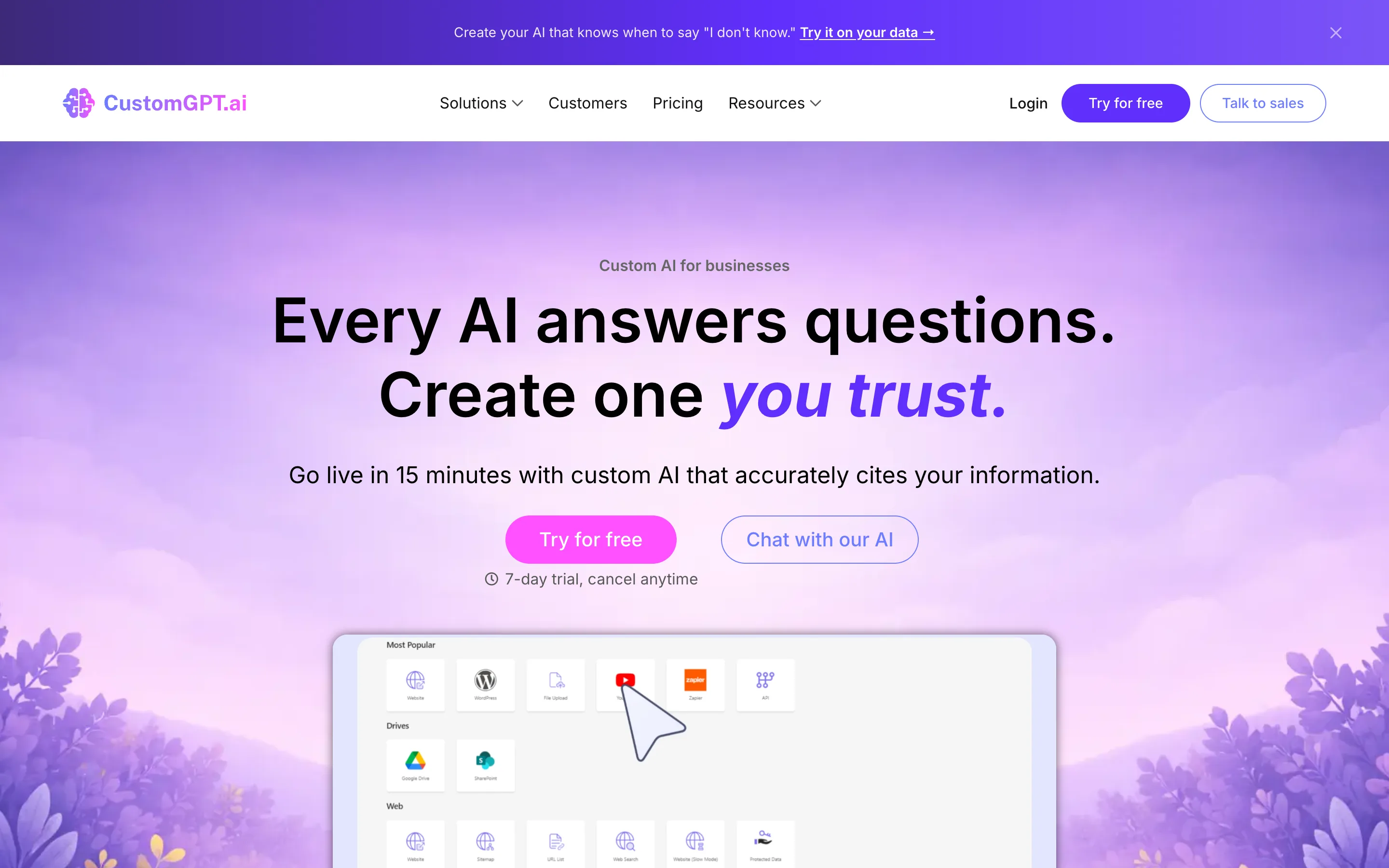
CustomGPT.ai is positioned for enterprise and high-content use cases. They emphasise document Q&A accuracy, citations, and security. If your "knowledge base" is hundreds of PDFs and policy docs, CustomGPT does well.
Pros
- Strong on long-form document Q&A and citations.
- Enterprise security posture (SOC 2, GDPR, custom SLAs).
- Anti-hallucination focus: the bot tends to refuse rather than invent.
Cons
- No free plan, just a 7-day trial. The paywall starts at $99/mo, which is steep if you're testing.
- Less focus on action-taking and integrations compared to mid-market alternatives.
- Best results require careful content curation. Garbage in, garbage out is more visible here than in some competitors.
Pricing. Standard $99/mo, Premium $499/mo, Enterprise custom.
Ideal for. Internal knowledge assistants, compliance-heavy teams, and document-rich support orgs.
4. My AskAI
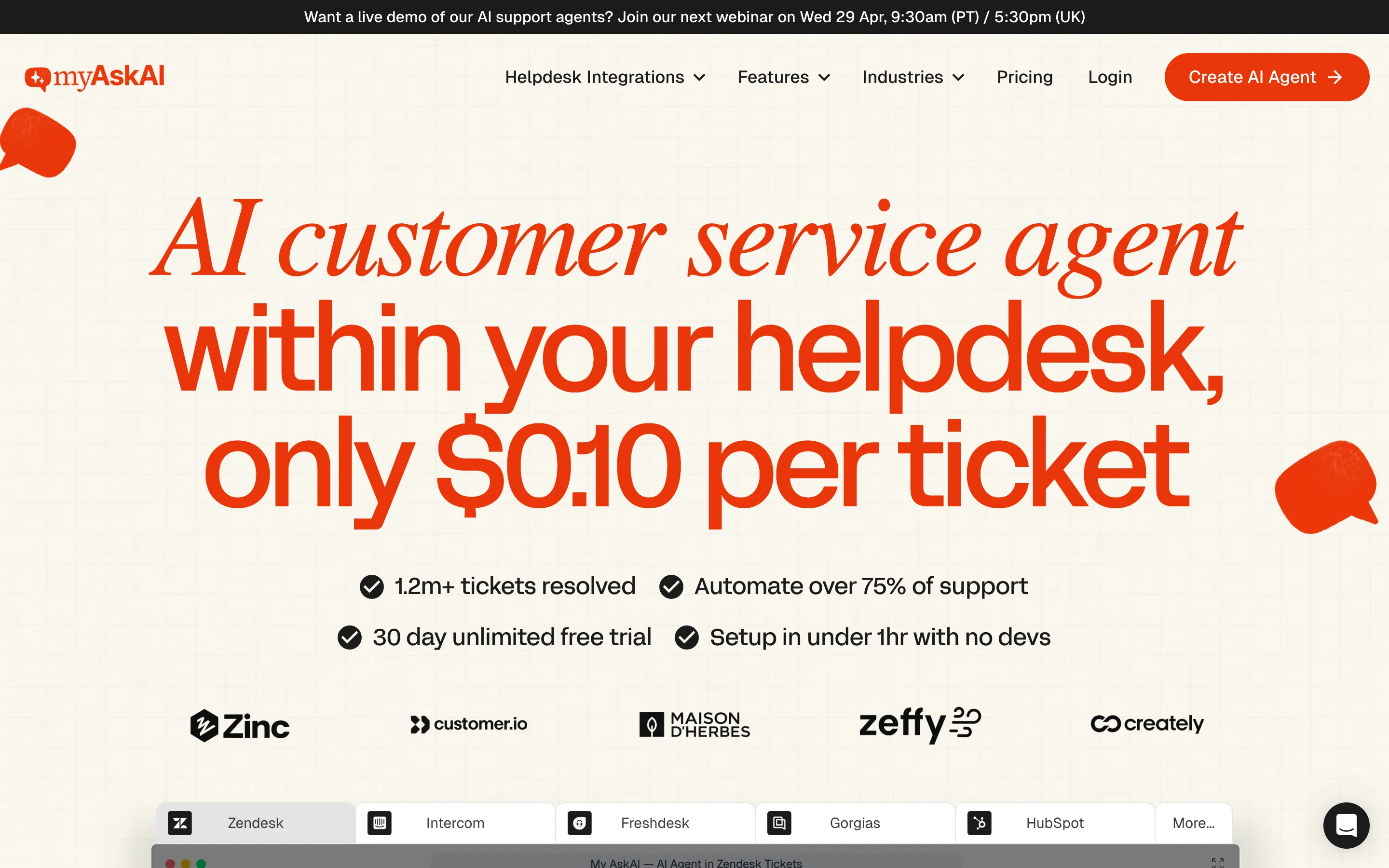
My AskAI took an interesting angle: instead of replacing your helpdesk, plug into Zendesk, Intercom, Freshdesk, Gorgias, or HubSpot and deflect tickets before they reach a human. They claim 75% deflection on common queries.
Pros
- Lives inside your existing helpdesk. No need to migrate or run two widgets.
- Pay-per-ticket pricing aligns spend with value (you pay for what gets deflected).
- Quick setup for teams already on a major helpdesk.
Cons
- Less standalone product. If you don't already have a helpdesk, you're paying for two tools.
- Pay-per-ticket can spike unexpectedly during incidents or seasonal traffic.
- Smaller integration set than the website-first alternatives.
Pricing. Pay-per-ticket from $0.10/ticket, plus $199/mo and $499/mo plans for higher volume. Free trial available.
Ideal for. Mid-market support teams already on Zendesk, Intercom, or Gorgias who want AI deflection without changing their stack.
5. DocsBot AI
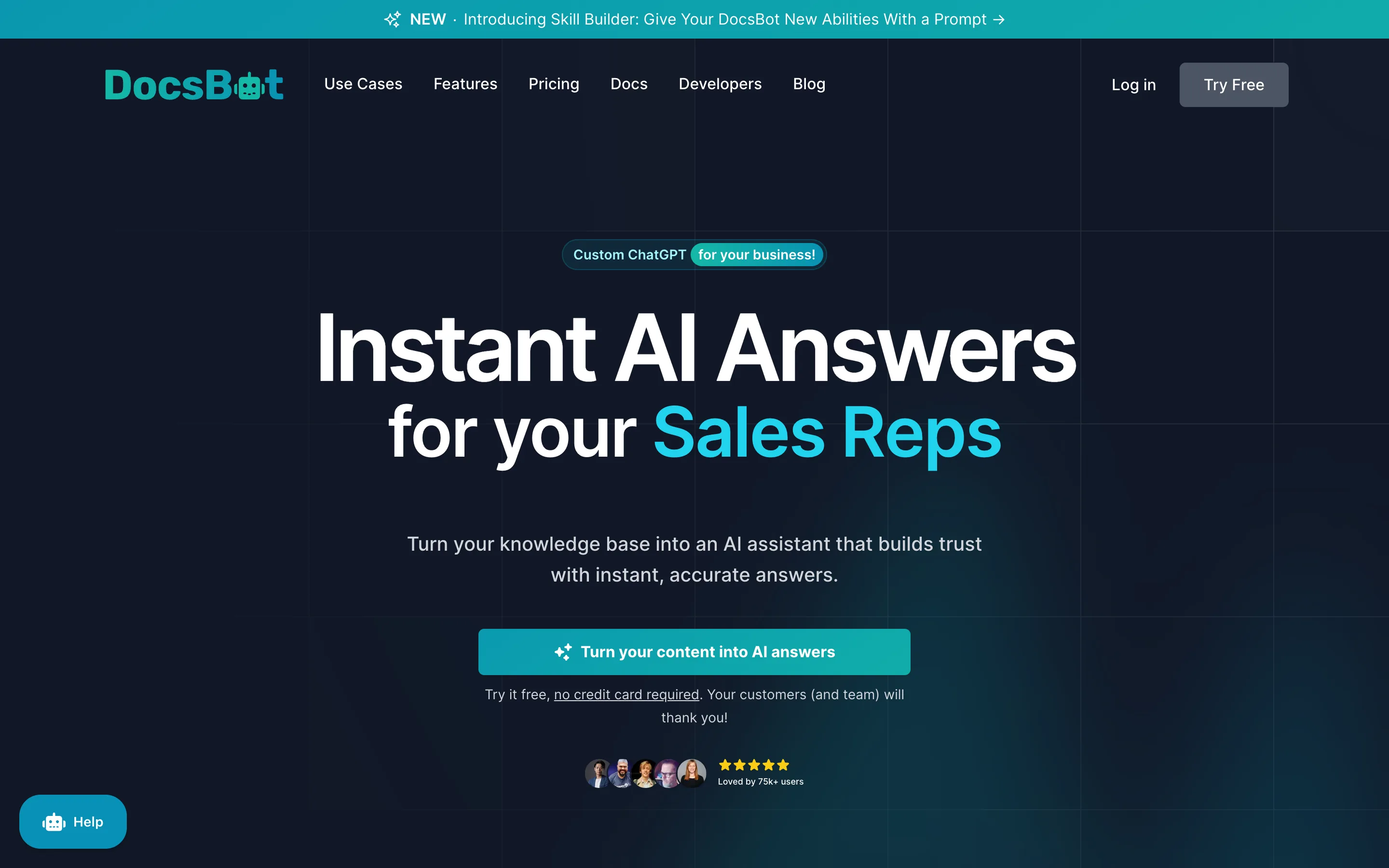
DocsBot AI is the developer-friendly, message-based-pricing option. They have a real free tier, an API-first approach, and message billing that scales linearly.
Pros
- Genuinely free starter plan with no credit card.
- Pay-per-message pricing is predictable and transparent.
- API-first. Solid documentation if you want to embed the bot into your own product.
Cons
- UI for non-technical teams is plainer than Chatbase or Tidio.
- Action/agent layer is light. It's mostly an answer engine.
- Light on out-of-the-box integrations. You'll lean on the API.
Pricing. Free plan, then pay-as-you-go from $0.008/message, plus Business and Enterprise tiers.
Ideal for. Developers and product teams embedding AI Q&A into their own SaaS or docs site. See our DocsBot alternative comparison for a head-to-head.
6. Botpress
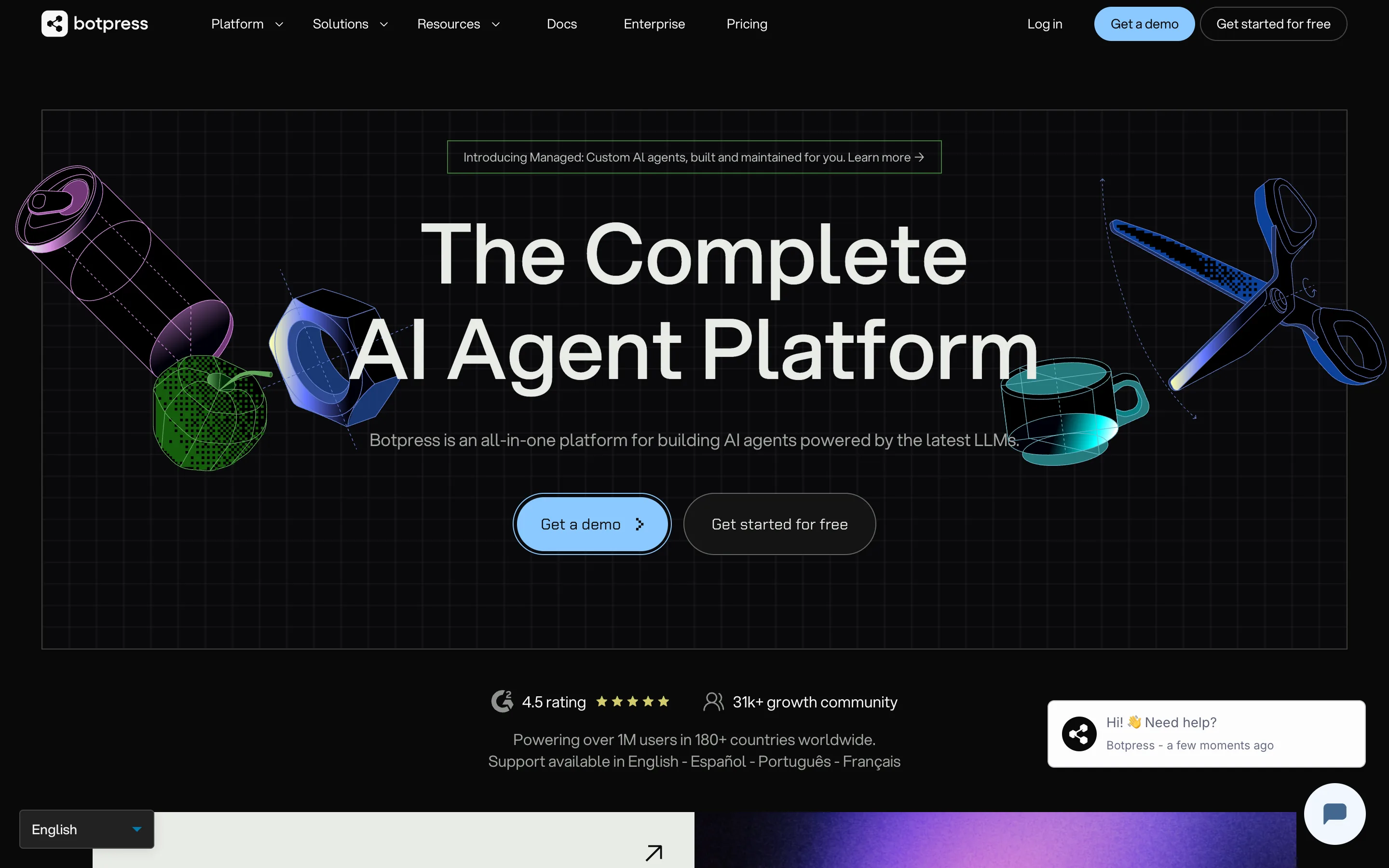
Botpress is the agent-builder for developers. If Chatbase feels too constrained and you want to design complex multi-step flows with branches, conditionals, custom code, and tool calls, Botpress is the platform.
Pros
- Genuinely powerful flow builder. You can build agents that do real work.
- Active developer community and template library.
- Open-source roots and a generous free Sandbox tier.
Cons
- Steeper learning curve than any other tool on this list. Expect to invest a week getting comfortable.
- Pricing scales fast on usage-based AI tokens. Easy to get a surprise bill.
- The bot-builder mindset overshoots a lot of "just answer questions about my site" use cases.
Pricing. Sandbox free, Plus $89/mo, Team $445/mo, Enterprise custom. AI usage billed separately on most tiers.
Ideal for. Developer teams building custom AI agents, not just chatbots. If you want agent-style actions without the build effort, see our Botpress alternative.
7. Voiceflow
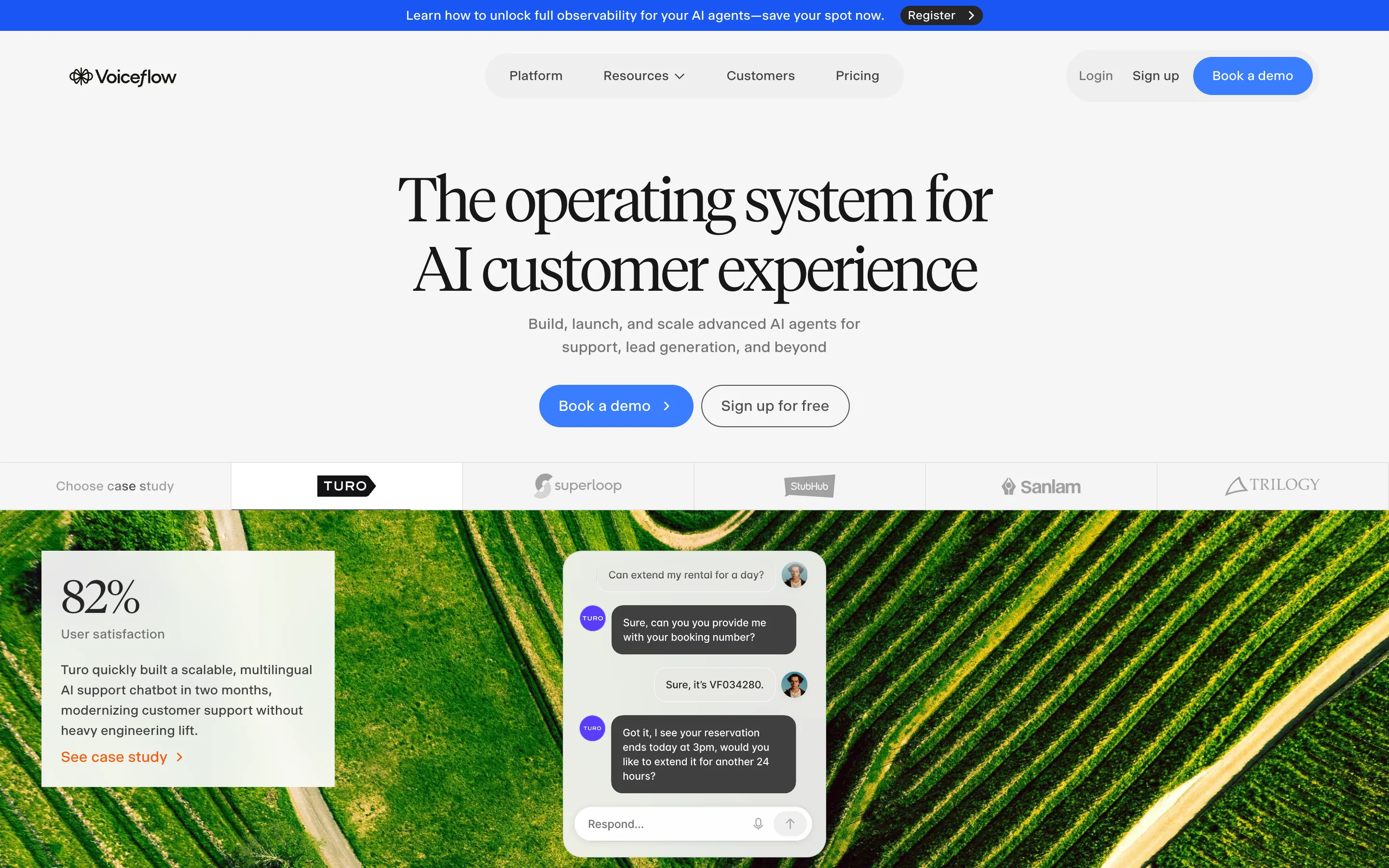
Voiceflow started in voice (Alexa skills) and has evolved into a multi-channel agent design platform. Strong with designers and conversation strategists at larger orgs. They've moved to a "for agencies" and "for businesses" pricing model with custom quotes.
Pros
- Best-in-class visual flow builder. Designers love it.
- Good handling of voice and multi-channel deployment.
- Used by recognisable brands (Spotify, Trivago, JPMorgan), so easier to defend internally.
Cons
- Public pricing has been removed. Expect a sales conversation before you can buy.
- Overkill for "answer questions about my docs." Aimed at orgs with a real conversation design function.
- Less plug-and-play for indie founders or small teams.
Pricing. Custom quote via sales. Free trial available. Historically Pro plans started around $50/seat/mo.
Ideal for. Mid-market and enterprise teams with dedicated conversation designers.
8. Tidio
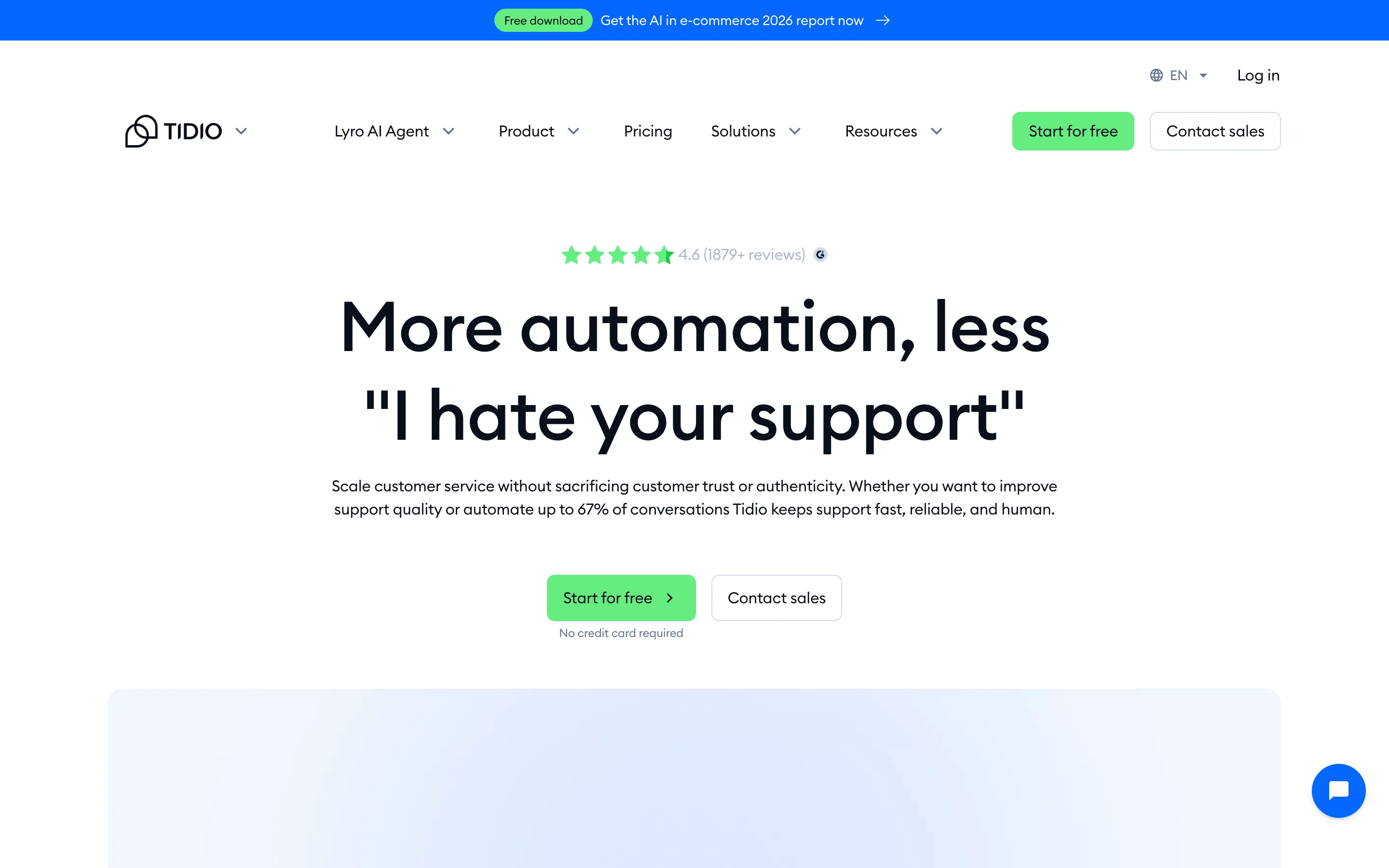
Tidio is live chat with an AI agent (Lyro) bolted on. If you already want a live chat tool and AI is a feature you'd like, this is a sensible pick. The free plan is real, and the upgrade path to Lyro is straightforward.
Pros
- Best free plan on this list for teams who want both live chat and basic AI.
- Lyro AI is solid for routine ecommerce and SaaS support.
- Tight Shopify and WordPress integrations.
Cons
- AI features are gated behind paid plans. The free plan is live chat only on the AI side.
- Lyro's data ingestion is more limited than Chatbase or SiteSpeak.ai.
- Costs add up fast as conversation volume grows on the Plus and Premium tiers.
Pricing. Free plan, Starter $29/mo, Growth $59/mo, Plus from $749/mo, Premium custom.
Ideal for. Ecommerce stores and SaaS teams who want one tool for live chat plus AI support. See our Tidio alternative for how the two compare.
9. Intercom (Fin AI Agent)
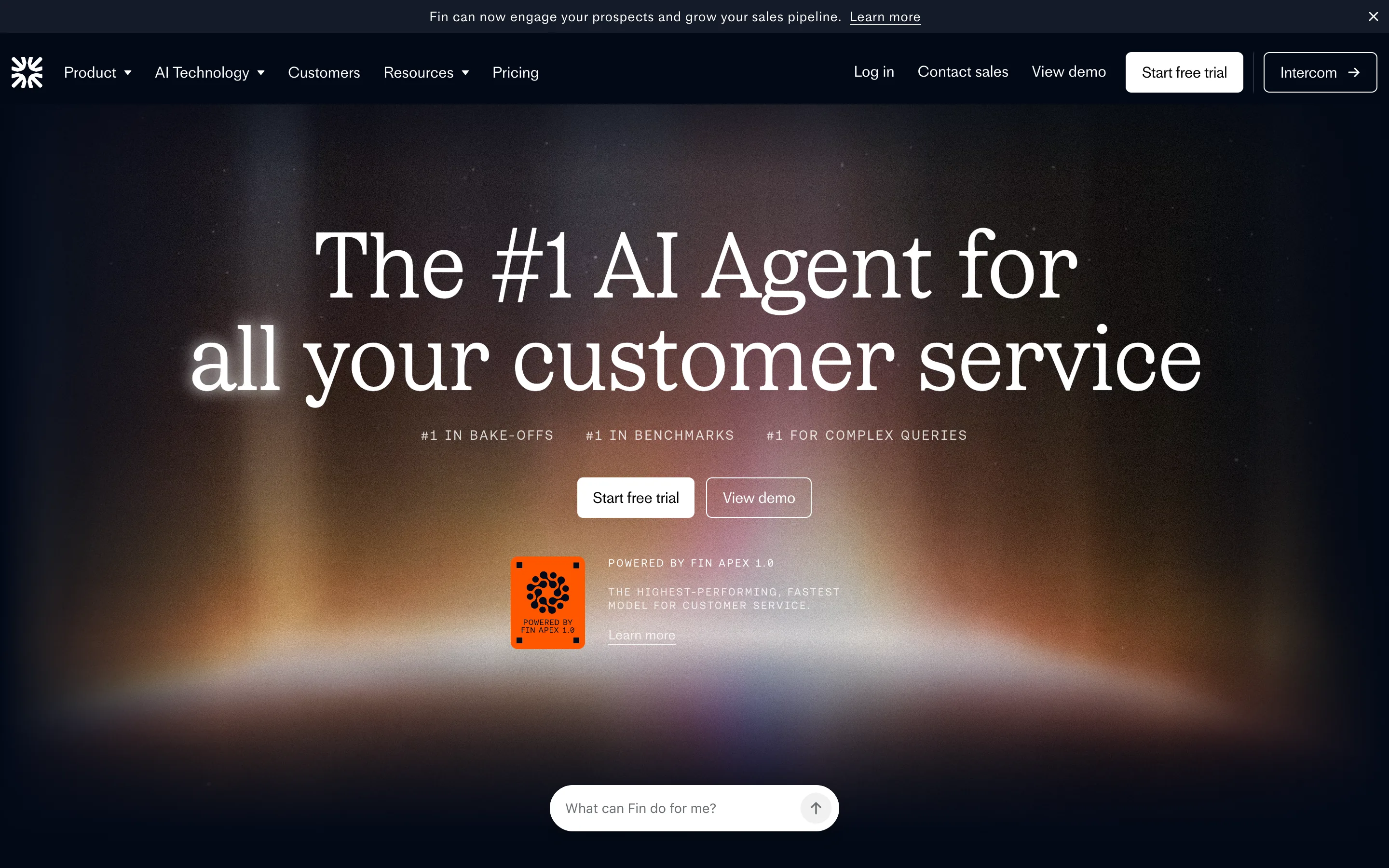
Intercom's Fin is the enterprise-grade AI agent on the most established customer messaging platform. If you're already on Intercom, Fin is the path of least resistance. If you're not, you're buying both.
Pros
- Best-in-class messaging UX. Pioneers of the in-product messenger.
- Fin's outcome-based pricing ($0.99 per resolution) only charges when it actually resolves.
- Deep ecosystem of apps, workflows, and integrations.
Cons
- Notoriously expensive at scale. Per-seat fees stack on top of per-resolution AI fees.
- Onboarding and migration are heavy. Plan for weeks, not days.
- The "everything platform" is a lot if you just want a Chatbase replacement.
Pricing. Essential $29/seat/mo, Advanced $85/seat/mo, Expert $132/seat/mo (annual). Fin AI Agent at $0.99 per resolution. 14-day trial.
Ideal for. Mid-market and enterprise support teams already invested in (or migrating to) Intercom. See our Intercom alternative for a cheaper path.
10. Crisp
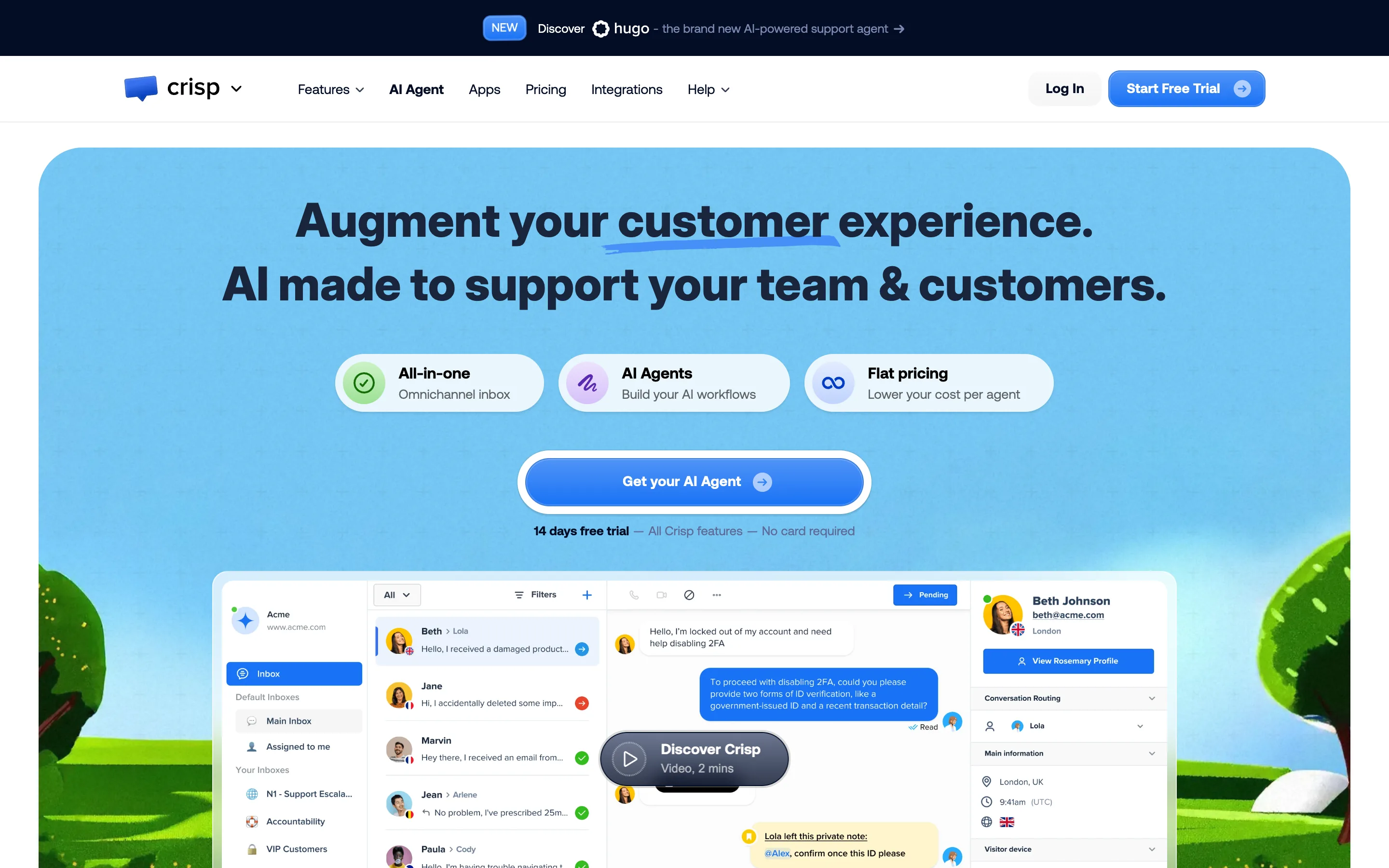
Crisp is the European multi-channel inbox option. Email, live chat, WhatsApp, Messenger, Instagram, all in one shared inbox, with an AI add-on (MagicReply, AI Bot) on the higher tiers.
Pros
- Multi-channel inbox is genuinely useful for support teams handling email, social, and chat.
- Per-workspace pricing (not per-seat) keeps small team costs sane.
- Strong privacy and EU-data-residency story.
Cons
- AI features lag the dedicated AI chatbot players. It's a CRM with AI, not an AI-first product.
- The free plan is generous on basics but doesn't include AI.
- Complex to configure when you're stitching multiple channels together.
Pricing. Free plan, Mini $45/mo per workspace, Essentials $95/mo per workspace, Plus $295/mo per workspace.
Ideal for. Small to mid-size teams handling support across email, chat, and social, who want a single inbox.
11. Tiledesk
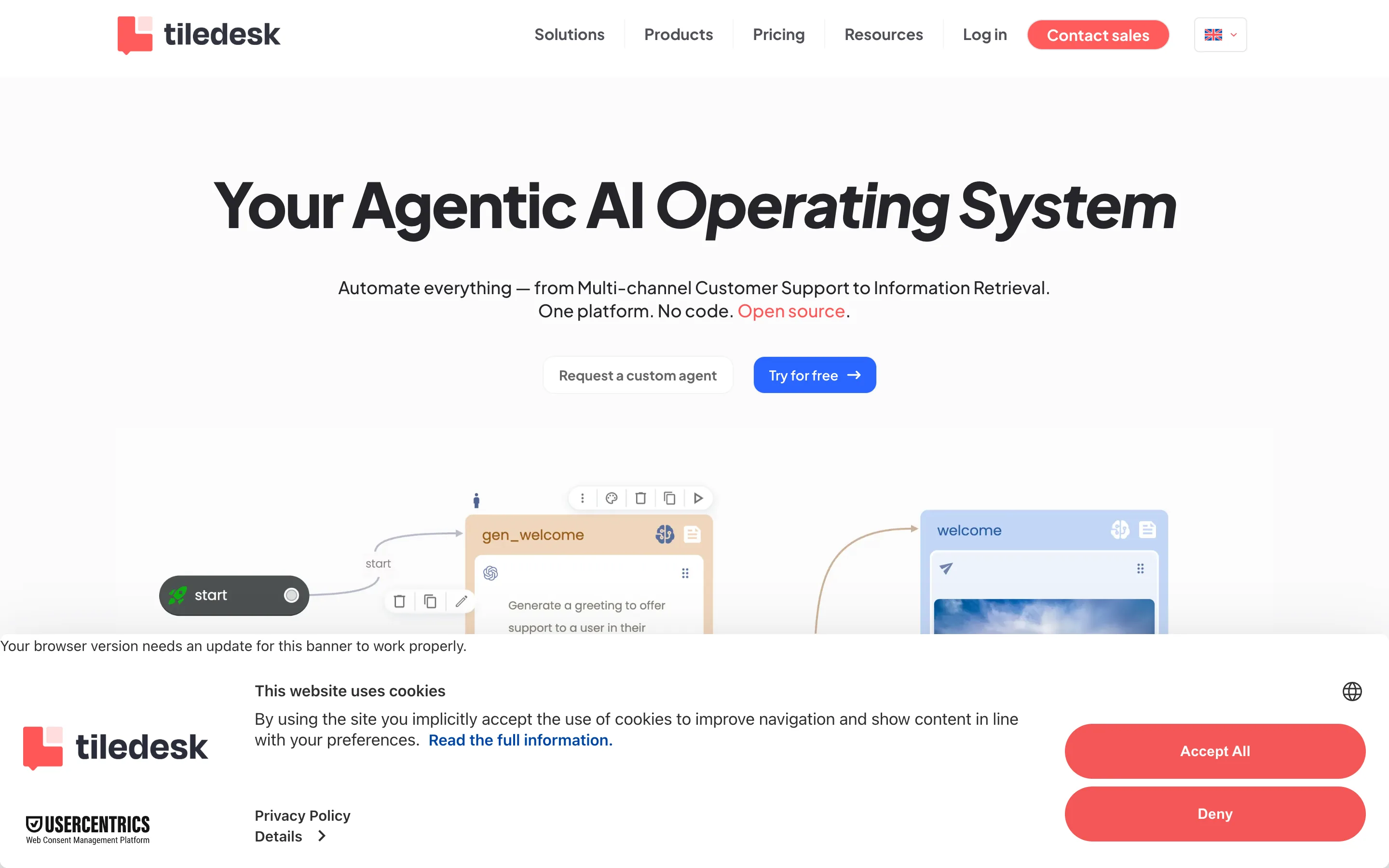
Tiledesk is the open-source option. Self-host the engine on your own infrastructure for free, or use their managed cloud. Active GitHub repo, real community, and a recent push into AI agents.
Pros
- Free if you self-host. Useful when data residency or compliance forbids SaaS.
- Open source, with a real community and contributors.
- Decent flow builder and ticketing.
Cons
- Self-hosting costs your team's time. The "free" path needs DevOps capacity.
- Polish lags the SaaS leaders. Expect some rough edges.
- AI features are newer. Less mature than Chatbase or SiteSpeak.ai.
Pricing. Free open source (self-hosted). Cloud: Pro €124/mo, Business €416/mo, Enterprise custom. 14-day cloud trial.
Ideal for. Engineering-led teams with strict data control requirements, or tight budgets and DevOps capacity.
How we picked these alternatives
We started with the tools customers most often compared against SiteSpeak.ai when they were buying. We then cross-checked against the public listicles ranking on Google for "chatbase alternatives" and added the ones we'd actually deploy. We left out tools that haven't shipped a meaningful update in 12+ months.
A few well-known names didn't make the cut. Drift has been absorbed into Salesloft and the AI chatbot side has stagnated. Ada is great but is enterprise-only and rarely surfaces as a Chatbase alternative in real buying conversations. ChatBot.com (LiveChat's AI product) is fine but didn't add anything not already covered by Tidio and Crisp.
If you've used one we missed and think it deserves a spot, let us know.
FAQ
Is Chatbase still a good option in 2026? Yes, especially for fast website-trained chatbots. But it's behind on action-taking, agent flows, and deeper integrations. If you only need Q&A, Chatbase is fine. If you need the bot to do work, look at SiteSpeak.ai or Botpress.
Which Chatbase alternative is cheapest? For genuinely free use, Tidio's free plan and Tiledesk's self-hosted version are the cheapest. For paid, DocsBot AI's pay-per-message and SiteSpeak.ai's $29/mo Hobby plan are the lowest entry points.
Which Chatbase alternative has the best free plan? Tidio (real free live-chat tier) and DocsBot AI (genuine free starter for AI Q&A) both stand out. Most other options are 7 to 14 day trials.
What's the best Chatbase alternative for ecommerce? For Shopify and WooCommerce stores, Tidio and SiteSpeak.ai have the deepest store integrations. Tidio if you want chat-first, SiteSpeak.ai if you want AI-first with deeper actions.
What's the best Chatbase alternative for documentation and knowledge bases? DocsBot AI for pay-as-you-go API-driven Q&A. CustomGPT.ai for enterprise document handling. SiteSpeak.ai for sites that already have a help center plus a public website to crawl.
Can I self-host a Chatbase alternative? Yes. Tiledesk is the established open-source option. Botpress also has a self-hosted path on their open-source version, though the cloud platform is where most of their effort goes.
What's the best Chatbase alternative if I'm already on Intercom? Intercom Fin if you're committed to the platform. My AskAI if you want AI deflection layered on top of Intercom without paying for Fin's per-resolution rates.
So which one should you pick?
If you want our biased-but-honest recommendation: try SiteSpeak.ai for a week. We built it for the same reason you're reading this article, the existing options had gaps. The 7-day trial doesn't ask for a credit card, and you'll know within an afternoon whether it solves your problem.
If you specifically want a head-to-head against Chatbase, see our Chatbase alternative page. If you're shopping more broadly across the AI chatbot category, our alternatives hub covers the rest of the field.
Last updated: April 2026.